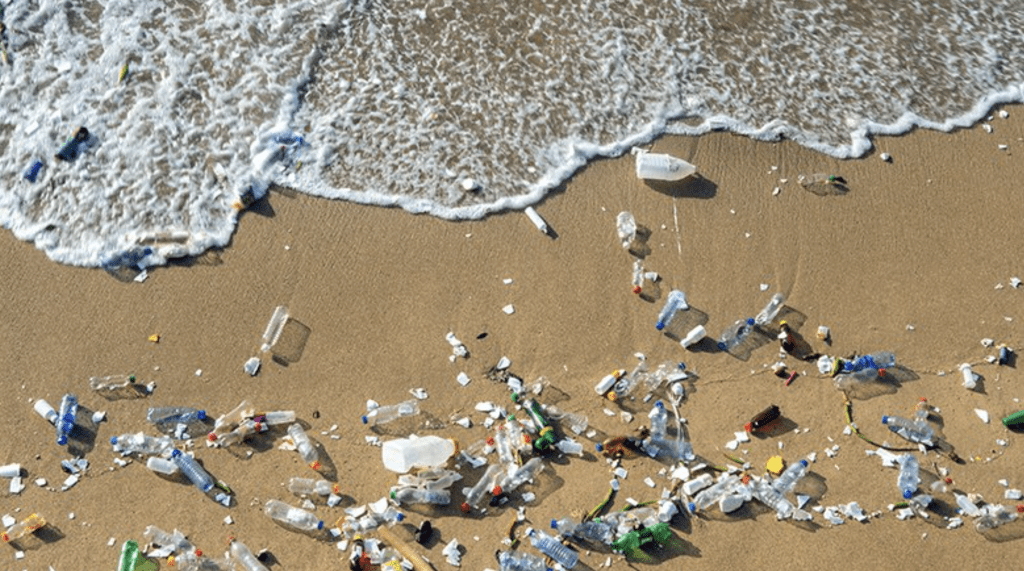
On some Malaysian beaches, you can’t take five steps without kicking a bottle or brushing against plastic half-buried in sand. The waves no longer bring just salt and sand; they carry the runoff of our lifestyles: plastic from cities, debris from landfills, and polluted water rushing downstream after every storm.
The numbers echo what the tides already reveal.
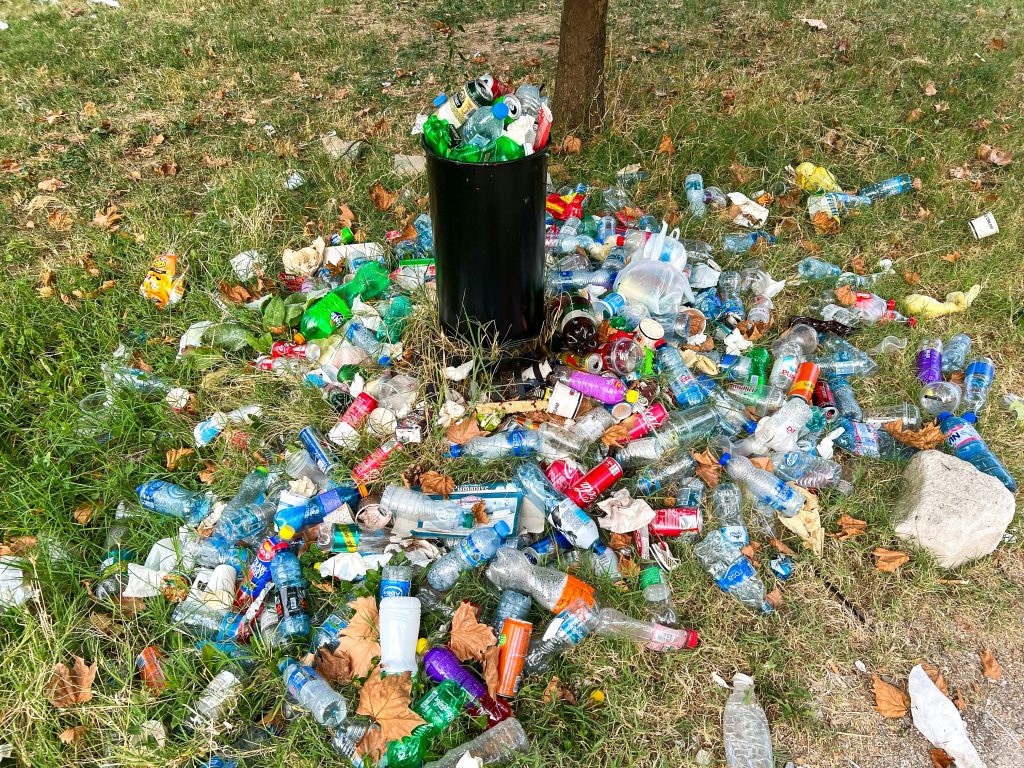
Malaysia generates 39,078 tonnes of solid waste every day, with plastic making up nearly 22%[1]. What doesn’t reach landfills slips into drains and rivers, where pollution cases perpetuate – driven by illegal dumping, sewage leaks, and industrial discharge.
Eventually, much of it ends up in the sea, contributing to an estimated 73,000 tonnes of Malaysian plastic waste entering the ocean annually[2]. Some beaches now record up to 1,930 plastic pieces per square metre, turning natural coastlines into layered evidence of a deepening crisis[3].
Yet beneath the weight of this pollution crisis, another current is rising. Young Malaysians are stepping forward, refusing to inherit a damaged environment without a fight.
Across Malaysia, the Youth Environment Living Labs (YELL), a joint initiative by UNDP and UNICEF and supported by Amanah Lestari Alam (ALAM), European Union (EU) and OSK Foundation, a national movement dedicated to environmental education and youth empowerment, is equipping this generation with the skills, networks, and confidence to design real solutions.
This story follows three of those initiatives – proof that while pollution is a national crisis, hope often begins with a handful of young Malaysians willing to roll up their sleeves and reclaim the future.
Fighting Waste, One Plate At A Time
Every day, Malaysians discard about 39,078 tonnes of solid waste, roughly 1.17 kg per person, according to Solid Waste Management and Public Cleansing Corporation (SWCorp)[1]. Much of this ends up in landfills, decomposing slowly and releasing toxins into soil and methane, a greenhouse gas about 25 times more potent than carbon dioxide[4].
At Kolej Yayasan UEM (KYUEM), students decided to disrupt this tragic cycle.
Food Wars, a student-led initiative supported by Akademi Impact and YELL, mobilised over 200 students, dining hall staff, and campus workers to separate food waste and transform it into fertiliser for campus use.
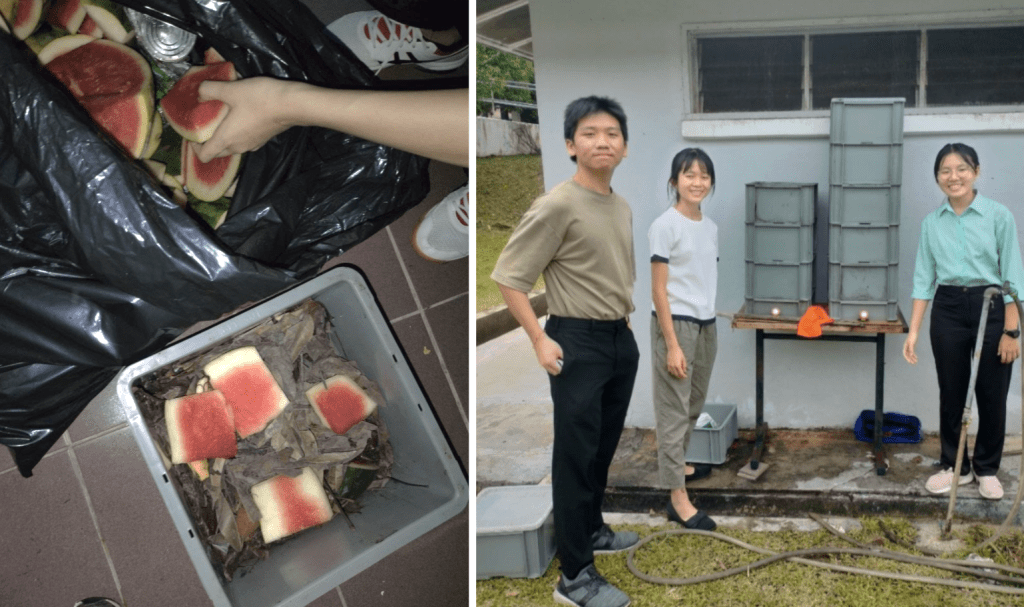
Within months, more than 300 kg of food waste was diverted from landfills. But the bigger victory was cultural: conversations about leftovers turned into collective action, and action turned into identity.
After seeing the feasibility of making fertiliser from food waste, I also experimented with it at home. – Dr Linda Kircher, KYUEM Lecturer
We want to help reduce kitchen waste. This is something we can do. – Dining hall staff
The momentum eventually sparked the formation of KYUEM’s first environmental club, a platform for student-led sustainability on campus.
Turning Students Into Citizen Scientists To Map Microplastics
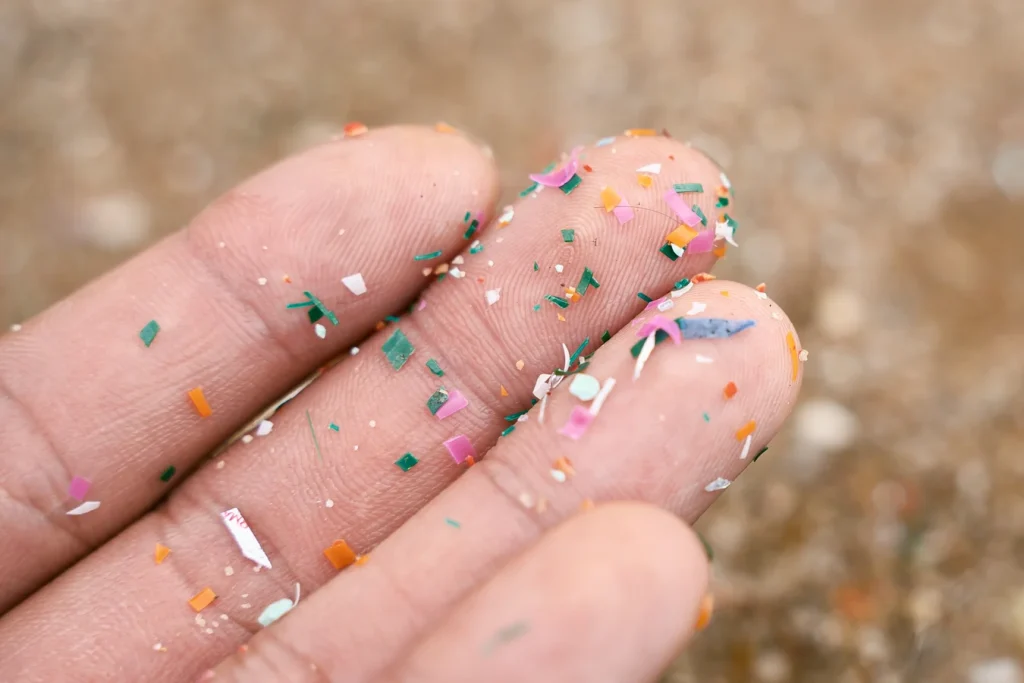
If food waste is obvious, microplastics are the opposite – nearly invisible, easily overlooked, and increasingly dangerous.
Malaysians ingest an estimated 502.3 milligrams of microplastics every day, with more than 50% coming from fish[5]. Researchers warn that this level of exposure may contribute to long-term health risks, including cancer, fertility issues, inflammation, hormonal disruption, foetal development issues and blood vessel constriction due to the chemicals and dyes these microplastics contain[6].
Yet in Perak, hundreds of students and teachers are now trained to detect what most Malaysians never even notice.
Led by Universiti Putra Malaysia (UPM) and Green Growth Foundation and supported by YELL, the pilot Citizen Science Mapping Initiative of Microplastics Pollution in Local Ecosystems transformed five schools into hands-on research hubs.

It began with training 14 teachers to incorporate microplastics analysis into their science curriculum, a first for many of the rural and semi-urban schools involved.
Then came the students. A total of 337 arrived with water samples drawn from backyards, drains, rivers, ponds – any source that represented “home.”
Together, they filtered, observed, documented, and debated. Over 32 hours of analysis, something shifted. Microplastics were no longer an abstract environmental threat; they became real, immediate, and personal.
Students began to ask these questions:
“Will the microplastics in water harm our health?”
“How do they reach the sea?”
“What can we do to reduce microplastics?”
Knowledge soared. Understanding of microplastics jumped from 30% to 97%. Awareness of health risks rose from 13% to 100%. Schools began enforcing their own policies: plastic reduction targets of 70–95% and 2.17 tonnes of recyclables collected[6].

This is what empowerment looks like – when environmental issues move from textbooks to lived experience to action.
Raising Ocean Stewards On The Islands
Beneath the turquoise waters of Perhentian, pollution may be invisible, but its threat is real. Marine debris, discarded plastics, and chemical runoff are choking fragile coral reefs and threatening endangered species.
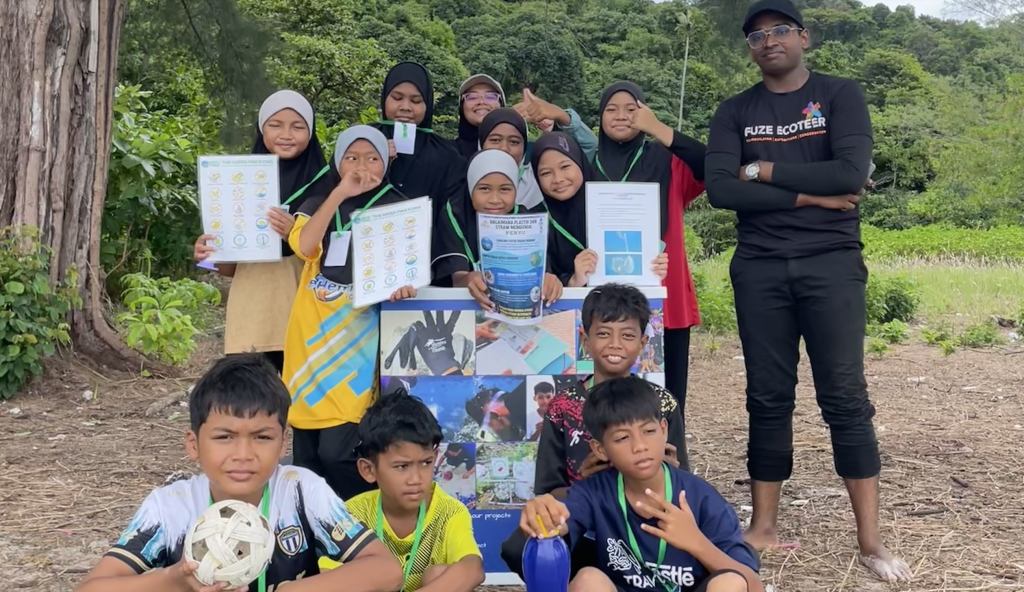
This is where Fuze Ecoteer’s Perhentian Eco Education Project (PEEP) steps in.
Supported by YELL, PEEP offers weekly eco-classes for children aged 7–12, blending classroom lessons with hands-on marine science and practical conservation skills. Between April and June 2024, 43 students participated in 88 hours of immersive learning, exploring coral monitoring, waste reduction, and broader ecosystem protection.
The ripple effect grew.
Marine conservation workshops spread to schools across Terengganu, reaching 1,889 students with lessons on coral reefs, turtles, marine parks, and pollution.
The initiative also prepares young divers to support the island’s Rapid Response Team. Through fish identification training, these youth learn to monitor reef health, spot pollution-related stress early, and contribute real data to conservation experts.
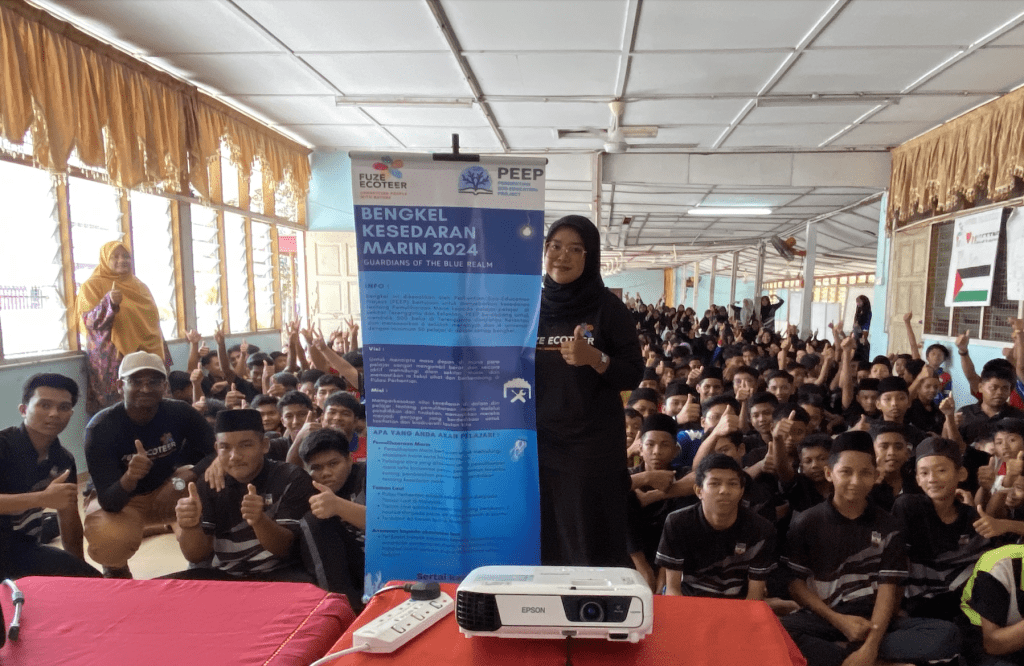
A new partnership with the Alunan Coral Project now allows students to participate in coral replanting – turning learning into literal restoration.
For many young islanders, this is their first taste of environmental agency. Their voices are shaping a new culture of stewardship in a community deeply tied to the sea.
A Partnership Powering a Movement
These breakthroughs didn’t emerge by chance. They’re the result of a partnership built on one belief: given the right tools and support, young people don’t just participate in environmental movements, they lead them.
ALAM works at every level to make this a reality. As a strategic partner with the Ministry of Education under the 13th Malaysia Plan, ALAM ensures students nationwide gain early exposure to environmental issues from pollution to climate action.
Beyond classrooms, ALAM partners with youth initiatives like YELL, proving that today’s empowered students become tomorrow’s environmental leaders.
ALAM served as both a strategic partner and enabler in this collaboration. Our role focused on bringing youth-driven solutions to the forefront by providing seed funding, technical guidance, and institutional support. – Rosnah Kamarul Zaman, ALAM, Board of Trustees
Beyond funding, ALAM connects youth projects to the networks they need: local authorities, school leadership, community organisations, and technical experts. That ecosystem is what transformed school experiments into policy changes, and island classes into conservation teams.
Youth-led initiatives are one of the most powerful levers for long-term environmental change. With resources and structure, young people produce solutions that are practical, community-rooted, and innovative. – Datuk Wira Dr. Mohammad Hardee Ibrahim, Group Chief Corporate Development Officer, Bank Pembangunan Malaysia Berhad (BPMB)
The projects directly align with ALAM’s mission to tackle pollution at its most critical points – waste, microplastics, and marine debris by empowering communities to take ownership of their ecosystems.
Empowering youth sparks meaningful action, turning national sustainability goals into local solutions for the environment and climate change. – Jesse Cheah, Head of Governance and Local Development, UNDP Malaysia
But perhaps the clearest discovery in this partnership is what it reveals about Malaysia’s future.
Early investment in youth creates a powerful pipeline of environmental leaders. These young changemakers are developing skills, networks, and real experience – positioning them to shape Malaysia’s sustainability landscape for years to come. – Nasha Lee, Climate & Environment Specialist, UNICEF Malaysia
In a nation where pollution accelerates faster than policy can respond, that pipeline is vital. Malaysia’s young environmental leaders are tackling today’s crises head-on and shaping solutions that will define tomorrow.
Explore our sources:
- F. Zainal. (2024). 39,000 tonnes of solid waste daily. The Star. Link.
- F. Fernando. (2024). Malaysia Ranks Third In Ocean Pollution: A Rising Tide Of Plastic Peril. The Rakyat Post. Link.
- The Star. (2025). Plastic pollution: A crisis we’re already eating. Link.
- C. Chu Hang. (2024). What can we learn about food waste management from South Korea and Japan. Bernama. Link.
- South China Morning Post. (2024). Malaysia eats more plastic every day than 108 other countries, study finds. Link.
- New Straits Times. (2024). Microplastics: Malaysia’s silent killer linked to over 48,000 cancer cases annually. Link.
- Summary Report by University Putra. (2023) A citizen science mapping initiative of microplastic pollution in local ecosystems from selected locations from Perak (Malaysia). YELL.